What Your HVAC Software Stack Actually Costs
Most contractors can name what their field service platform costs. Almost nobody can name the total across all six or seven tools. Here is how to work out your real number, and what consolidating changes beyond the invoice.
- Most contractors can name what their field service platform costs. Almost nobody can name the total across all six or seven tools. Here is how to work out your real number, and what consolidating changes beyond the invoice.
- Where AirMatch can make the proposal process clearer for homeowners.
- Practical ways to protect momentum from consultation to signature.
Ask an HVAC contractor what their software costs and most will name one number: whatever the field service platform bills them every month. It is the biggest line, so it is the one they remember.
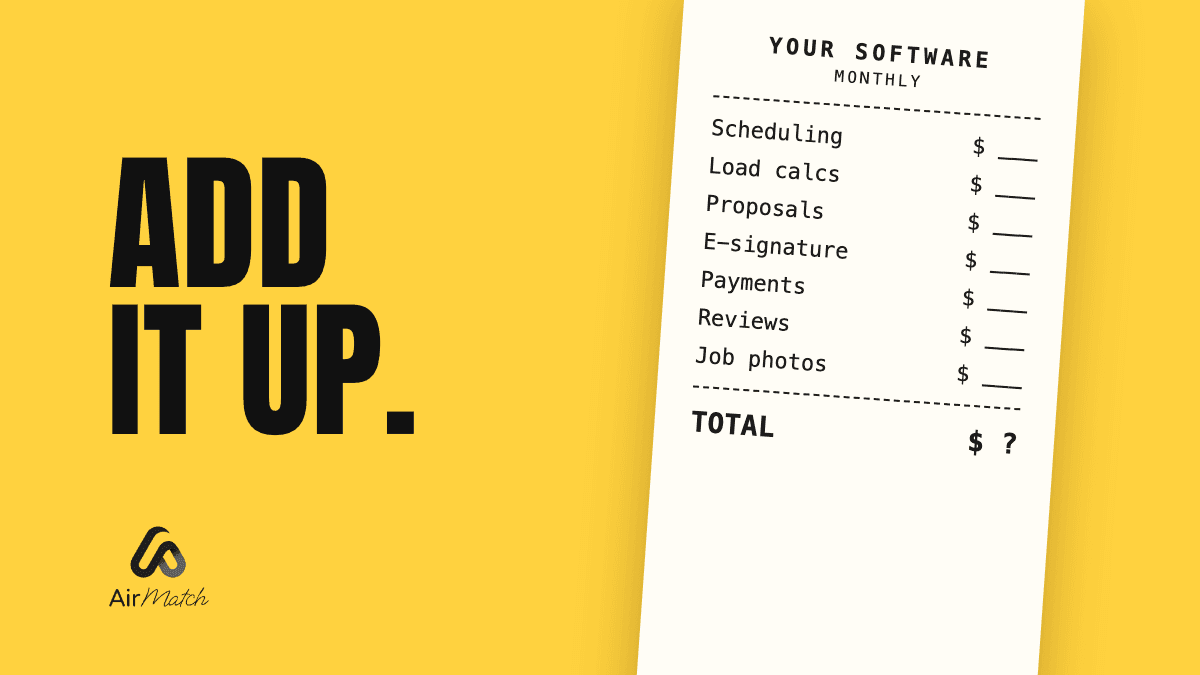
It is rarely the whole bill. The load calculation tool is billed separately. So is the e-signature service, the review request tool, the photo documentation app, and whatever the proposals get built in. Each was bought at a different time to solve a different problem, each renews quietly, and no single invoice ever shows the total.
The real number is usually four figures
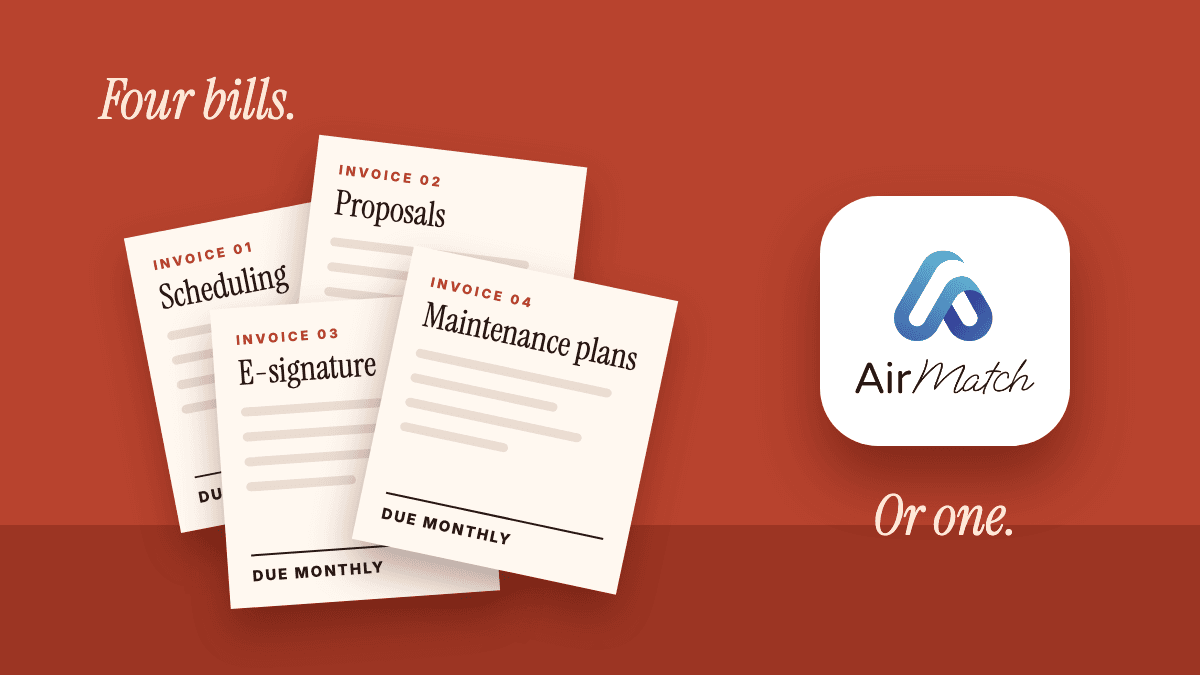
Add the pieces up and a typical residential contractor is somewhere north of a thousand dollars a month across six or seven separate software tools. Not because any one of them is expensive, but because there are seven of them.
Here is the part that is easy to miss: the subscriptions are the smaller cost. The larger one is that none of those tools talk to each other, so a person on your team is the integration. Someone re-types the customer into the scheduler after the proposal is signed. Someone reads the equipment off the quote and builds the invoice by hand. Someone copies the address into the photo app. Every one of those handoffs is a chance to get it wrong, and the ones that go wrong are the expensive ones.
The word "integrates" is doing a lot of work
Every one of those tools has an integrations page. That is not the same as your tools talking to each other, and the gap between the two is where the work goes.
In practice an integration usually turns out to be one of these:
One direction only. The proposal tool pushes a customer into the scheduler, but nothing comes back. A phone number corrected in the field never reaches the record the office is looking at, so now you have two versions of the same customer and no way to know which one is right.
Some of the fields, not all of them. Name and address sync. The equipment list, the scope of work, the warranty terms and the price do not, because the receiving system has nowhere to put them. The parts that matter most to the install crew are exactly the parts that do not travel.
A chain somebody built once. It works until a vendor renames a field, and then it stops without telling anybody. You find out when a customer calls to ask why nobody showed up.
Nightly, not now. A dispatcher looking at the board at ten in the morning is looking at last night''s version of the truth, on the one day it matters.
Then there is what happens when a sync does break: no single vendor owns it. You open a ticket with one and they point at the other. In the meantime somebody on your team is moving the data across by hand, which is precisely the state you were paying to get out of.
None of that maintenance appears on any invoice. It shows up instead as the office manager who just knows which system to check first, and as the hour a week somebody spends reconciling two customer lists that were supposed to be one.
Work out your own number
Rather than guess, put your real figures in. The calculator below starts with a typical stack, but every line takes any number you type, so replace them with what you actually pay.
What are you paying today?
Per monthType what you pay. Leave anything you do not pay for at zero.
 AirMatch pricing
How many people need an account?
- Per person with AirMatch
- $57.80
- Per person today
- $226.20
You would save
$10,104
a year
$842 a month
7 separate software tools become one. One bill, one login, and the job, the proposal, and the invoice all agreeing with each other.
Every plan includes every feature. Only the number of people changes the price, and the cost per person falls as you add them: $289 a month covers up to ten.
What each of those becomes.
Consolidating only counts if the one app does the work.
- Scheduling and dispatch
- A live dispatch board with per-tech lanes, drag to schedule or reassign, conflict and skill warnings, an unscheduled queue, and technician GPS on a map.
- Load calculations
- LaserCalc, room by room, on a phone in the driveway. Design temperatures for every US city, and a report you can hand to the homeowner or the permit office.
- Proposals and sales presentation
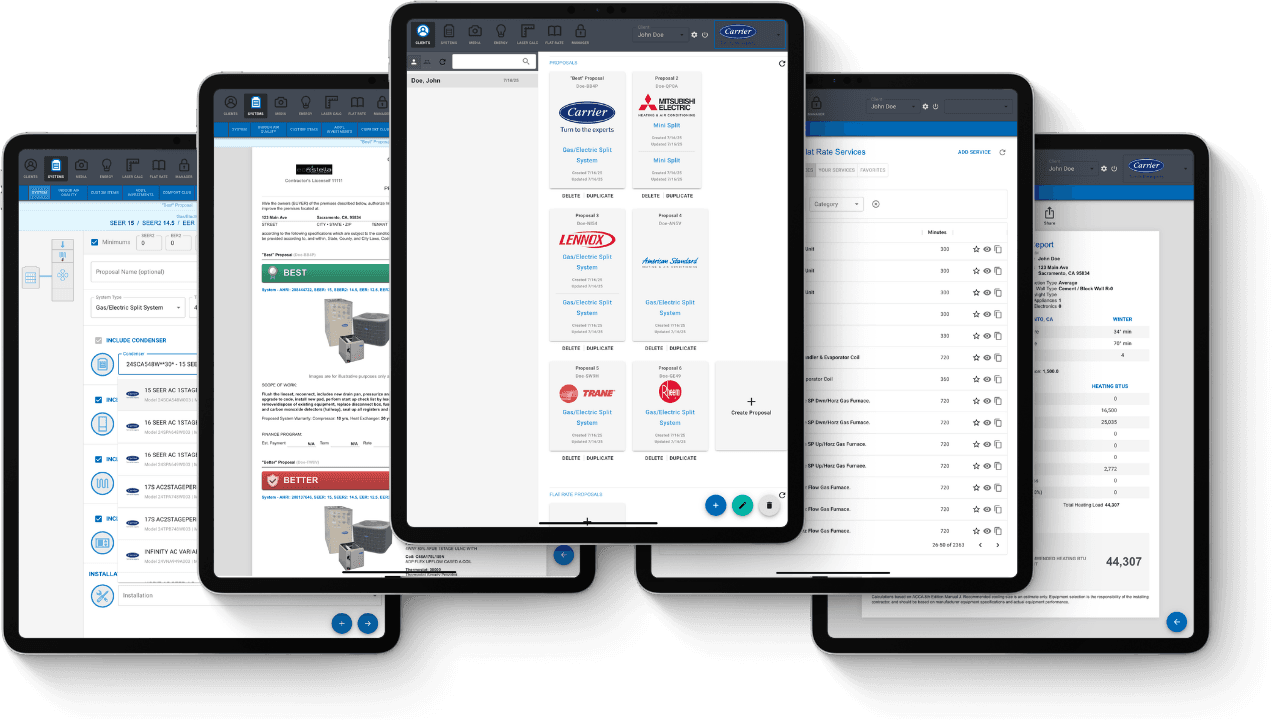
- AHRI verified matchups, Good / Better / Best in one document, financing and rebates priced in, and a homeowner view that works on a phone.
- E-signature
- The homeowner signs the proposal where they read it. Nothing to send, countersign, or chase.
- Invoicing and payments
- Invoices built from the job that sold, paid online or in the driveway, with what is still owed visible without opening anything.
- Follow up and reviews
- Appointment reminders, en route messages, and review requests that fire off the job itself, plus replies handled in one place.
- Job photos and video
- Photos and video captured against the job itself, through checklist photo fields that can be marked required, so the documentation is attached to the work rather than living in a separate app.
- Maintenance agreements
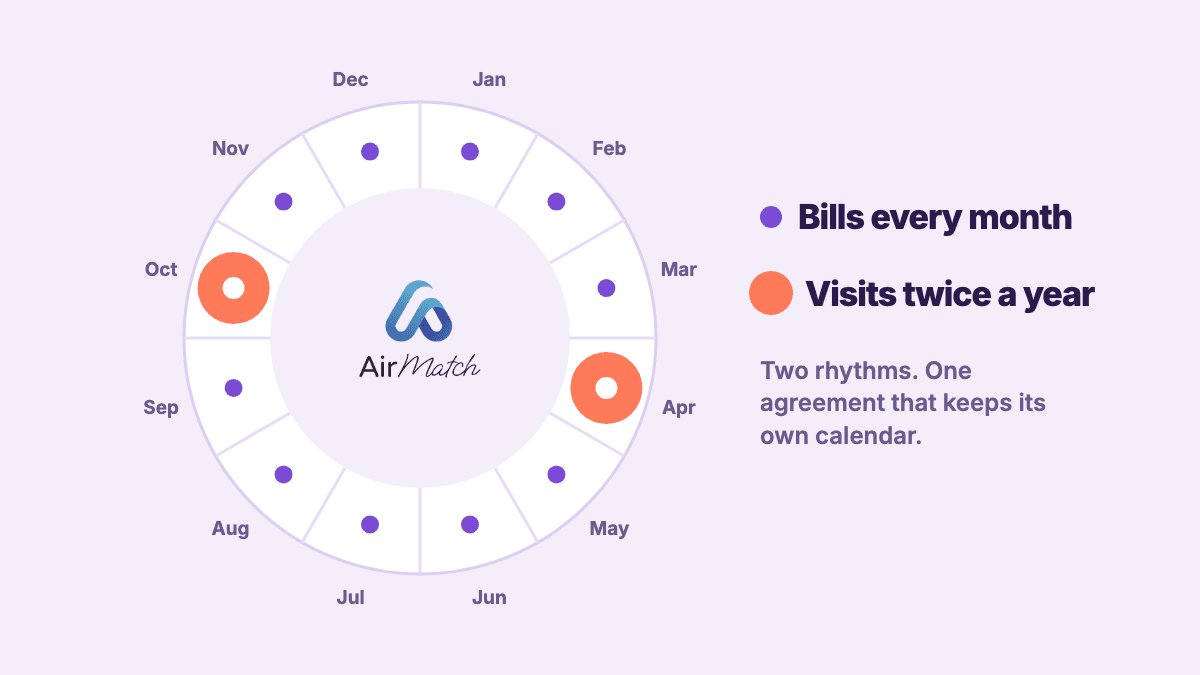
- Agreements that book their own visits, show you who is due and who has lapsed, and bill on their own schedule.
- Customer portal and messaging
- A portal where the homeowner sees their proposal, visits, invoices, and agreement, and can book their own appointment.
What consolidating actually changes
The saving is the headline, but it is not the reason contractors move. The reason is that one record carries the job from the first knock to the last payment.
The load calculation is done in the house, on a phone, and it becomes the sizing that the proposal is built from. The proposal carries AHRI verified matchups, Good / Better / Best, financing and rebates already priced in, and the homeowner signs it where they read it. The signed proposal becomes the job, and the job arrives on the dispatch board carrying the exact scope and equipment that was sold, so the install crew sees what the salesperson promised rather than a printout of it.
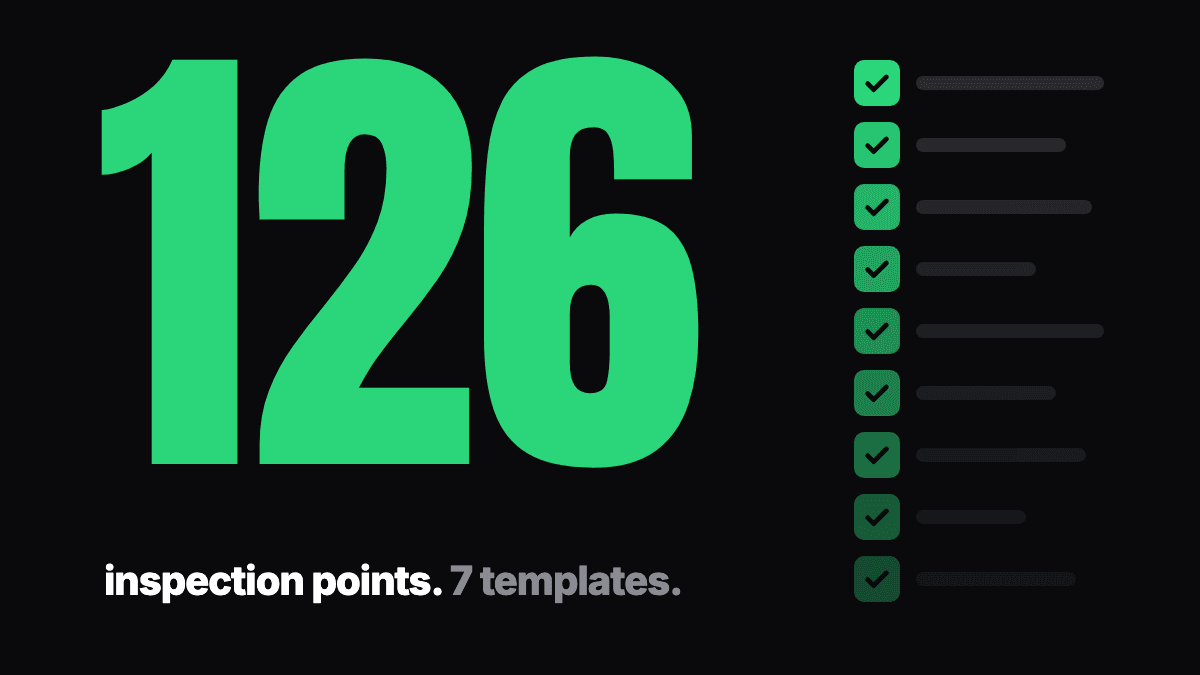
Required checklists gate the completion, so a job cannot be closed with the photos and readings missing. The invoice builds itself from the job that sold, and gets paid online or in the driveway. Then the reminders, the review request, and the next maintenance visit fire off the job itself.
None of that is a handoff. That is the difference a single system makes, and it does not show up on any subscription line.
A fair warning about calculators like this one
If you are a one or two person shop running lean on free tools, one paid subscription can genuinely cost more than what you have now. The calculator will tell you that rather than pretending otherwise, because a savings tool that always says you save money is one you stop believing.
What changes even then is the handoffs. If the tools you are comparing do not do all of the work above, the two numbers are not measuring the same thing.
Where to start
Most contractors do not move everything at once. They start with proposals, because that is where the money is won, then bring scheduling and invoicing over once the team is comfortable with it. Onboarding and migration are part of the plan rather than an add-on.
If you want to see the whole thing end to end before you work out any numbers, there is a six minute walkthrough on the One App Savings page, and you can compare us directly against the platform you are on today.
Practical guidance from the team building proposal, sizing, financing, signature, and payment workflows for residential HVAC contractors.
Ready to build HVAC proposals homeowners actually understand?
See how AirMatch helps contractors present Good / Better / Best options, collect signatures, show financing, and keep every sales conversation moving.
7 days free. Cancel anytime.